Run a software selection like a project.
A software choice shapes budgets, workflows and teams for years. Treat it like any other project: a clear scope, named stakeholders, requirements before demos, and a decision you can explain afterward.

Why selections go sideways
Most software selections start with a list of names. Someone used one at a previous job, a colleague recommends another, a search turns up a third. The demos begin before anyone has written down what the team needs, so each vendor sets the terms of its own evaluation. A few weeks later the team is comparing presentations, not fit.
Scope it before you search
Start the way you would start any project. Describe the problem in a short paragraph: the work that is not going well today, and what better would look like. Then name who will use the product, who pays for it, who approves it and who supports it afterward. That list is your stakeholder map, and each person on it has a question you would rather hear now than in the final week.
Requirements before demos
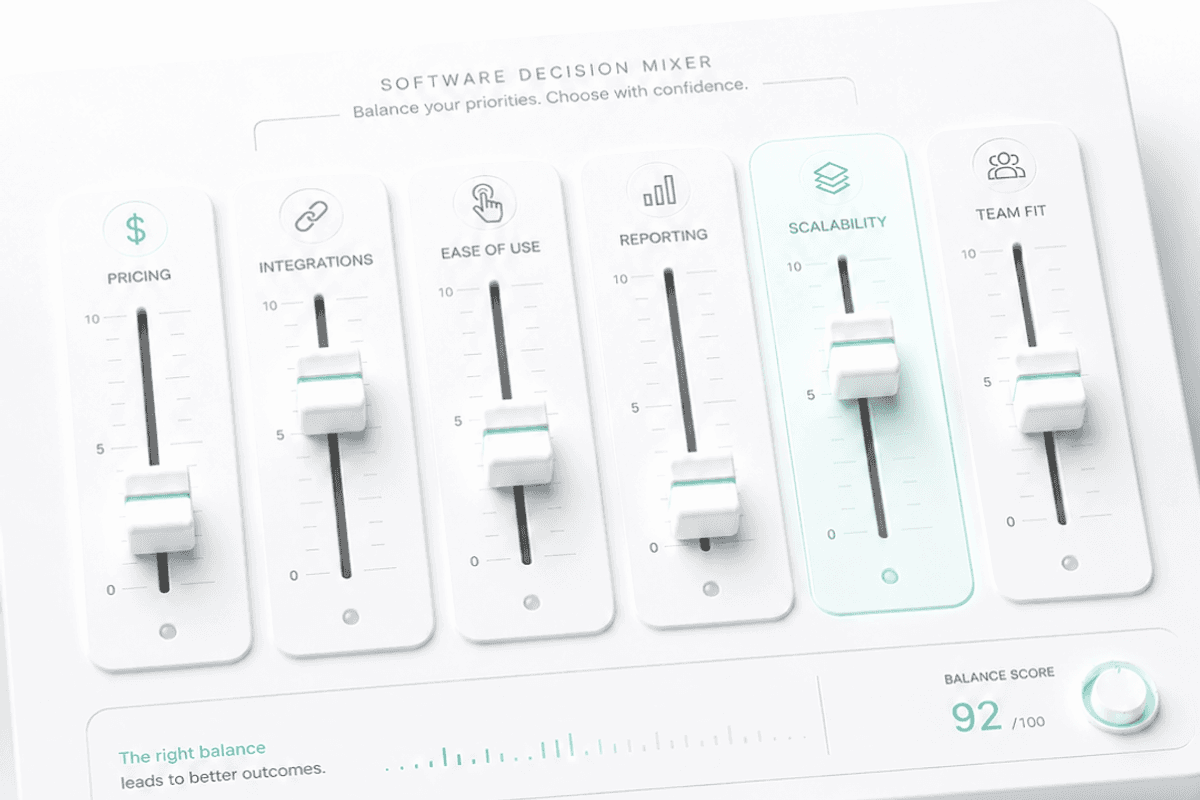
Turn the problem into requirements, and sort them. Some are conditions: an integration with a tool you already rely on, a report leadership expects every month, a workflow the team cannot do without. Others are preferences you will trade against each other. Agree on which preferences matter most before any vendor is in the room.
A demo is then a test against your list, not a tour of theirs. Send the requirements ahead and ask each vendor to show how the product meets them.
Keep every option on the same page
Ask every product the same questions and keep the answers in one place: which requirements it meets, which it misses and which are still open. An open question is not a failed product. It is the next thing to ask. The comparison stays fair because every option is read against the same record.
Decide, and write down why
When the choice is made, write down why: the requirements that decided it, the trade-offs you accepted and the questions that stayed open. The decision will come up again, at renewal or when someone new asks why this product was chosen. A short record answers that in minutes instead of a meeting.
Where Juukbox fits
Juukbox is built around this shape. You describe the work, Otis turns it into a decision profile of requirements and priorities you can edit, and products are matched against it with the reasons shown. Share the decision space and your stakeholders weigh in on the same record, so the selection runs like the project it is.

Start your own search.
Describe what you need and Juukbox will help you compare products, with the reasons behind every match.